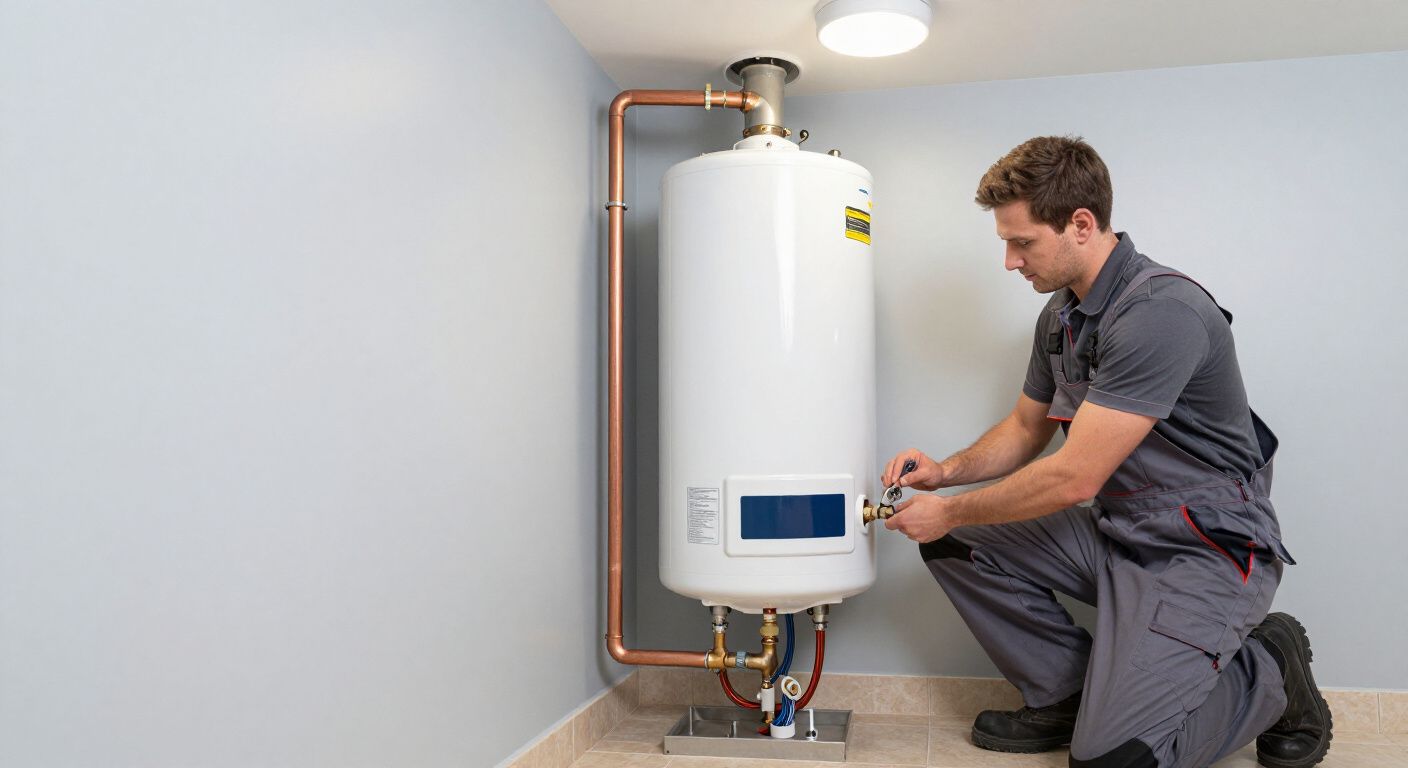


A Water Heater Leaking From the Bottom Is Usually Beyond Repair
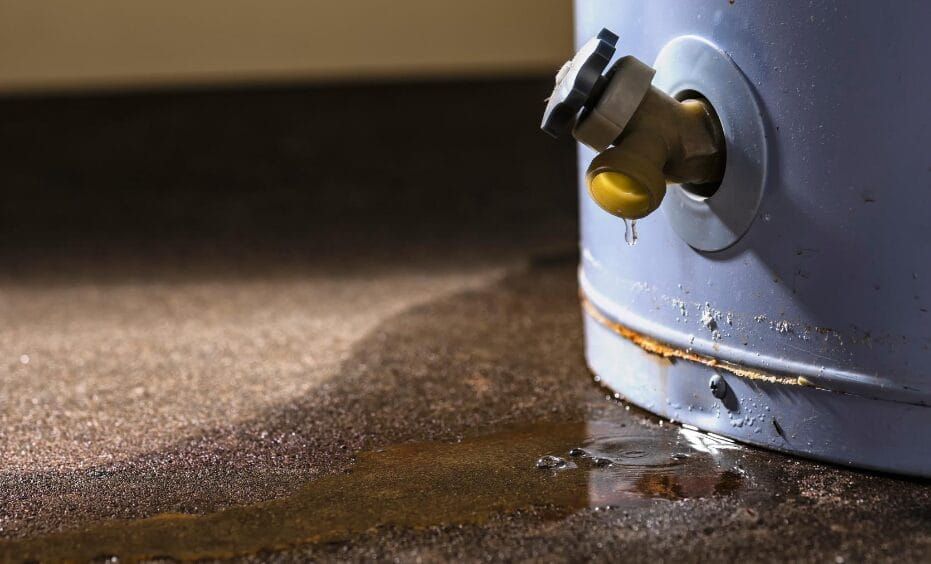
Water heaters rarely leak without warning. When water is actively pooling from the bottom of the tank, it almost always means the tank itself has failed internally.
A water heater leaking from the bottom emergency is not a slow drip problem , it’s a structural tank failure that can release dozens of gallons of water quickly, flooding garages, closets, or utility rooms and spreading under slabs before you realize how severe it is.
This guide explains what to do immediately, why bottom leaks are so dangerous, and when this becomes a same-hour plumbing emergency.
FIRST: Shut Off Power or Gas to the Water Heater
Do this immediately.
Electric water heater
- turn off the breaker labeled “water heater”
Gas water heater
- turn the gas control valve to
OFF
A leaking tank under heat or pressure can worsen rapidly.
SECOND: Shut Off the Water Supply to the Heater
Stop the source.
- locate the cold-water shutoff valve above the heater
- turn it OFF
- if the valve won’t close, shut off the
main water supply
As long as water feeds the tank, leakage continues.
Why Water Heaters Leak From the Bottom
Bottom leaks are rarely minor.
1. Internal Tank Corrosion
Over time:
- sediment settles at the bottom
- heat accelerates corrosion
- the steel tank wall weakens
- rust eats through the base
Once this happens, replacement is required.
2. Sediment Overload (Very Common in South Florida)
Mineral-heavy water causes:
- thick sediment buildup
- overheating at the tank base
- internal cracking
- premature failure
This is one of the leading causes of bottom leaks locally.
3. Failed Welds or Tank Seams
As tanks age:
- weld points weaken
- seams split under pressure
- leaks appear suddenly and worsen fast
These failures are structural , not repairable.
4. Drain Valve Failure (Less Common but Possible)
If water appears directly below the drain valve:
- the valve may be cracked
- threads may be compromised
Even then, tank condition must be evaluated immediately.
🚫 What NOT to Do When a Water Heater Leaks From the Bottom
❌ Do NOT try to seal or patch the tank
❌ Do NOT keep the heater powered
❌ Do NOT drain and restart the unit
❌ Do NOT assume the leak will stop
❌ Do NOT ignore small but steady pooling
Bottom leaks almost always get worse, not better.
Hidden Damage Bottom Leaks Cause
Even moderate leaks can lead to:
- water under slabs
- rusted nearby appliances
- mold growth in closets or garages
- drywall and framing damage
- electrical hazards
Many homes don’t realize how far water spreads until cleanup begins.
Why This Escalates Faster in South Florida
South Florida homes are especially vulnerable because:
- slab foundations trap moisture
- humidity slows drying
- garages often connect to living space
- water heaters are commonly placed near walls
What starts as pooling becomes widespread damage quickly.
When This Is a SAME-HOUR Emergency
Call an emergency plumber immediately if:
- water is pooling or spreading
- the heater is 6–8+ years old
- rust is visible on the tank
- hot water output suddenly changed
- the leak appeared without warning
- water is migrating toward walls
These indicate active tank failure.
How Emergency Plumbers Handle Bottom-Leak Water Heaters
At Leading Plumbing Services, emergency response includes:
- stopping active water flow
- confirming internal tank failure
- preventing further flooding
- safely removing the failed unit
- inspecting surrounding damage
- installing a properly sized replacement
- addressing pressure or sediment causes
We focus on containment first, replacement second.
Why Waiting Often Leads to Flooding
Homeowners who delay often face:
- sudden tank rupture
- garage or closet flooding
- slab moisture damage
- mold remediation
- emergency replacements under worse conditions
Replacing a failing heater early is far cheaper than repairing water damage.
South Florida Emergency Reality
In South Florida, water heater bottom-leak emergencies are one of the most common end-of-life failures due to sediment and corrosion.
Many tanks fail suddenly after years of internal deterioration.
Once the bottom leaks, the tank’s lifespan is over.
Final Emergency Guidance
If water is pooling under your water heater, shut it off immediately and call a professional. Bottom leaks signal tank failure and waiting risks sudden flooding.
Call/Text Leading Plumbing Services now for 24/7 emergency water heater replacement and flood prevention:
(561) 506-6159