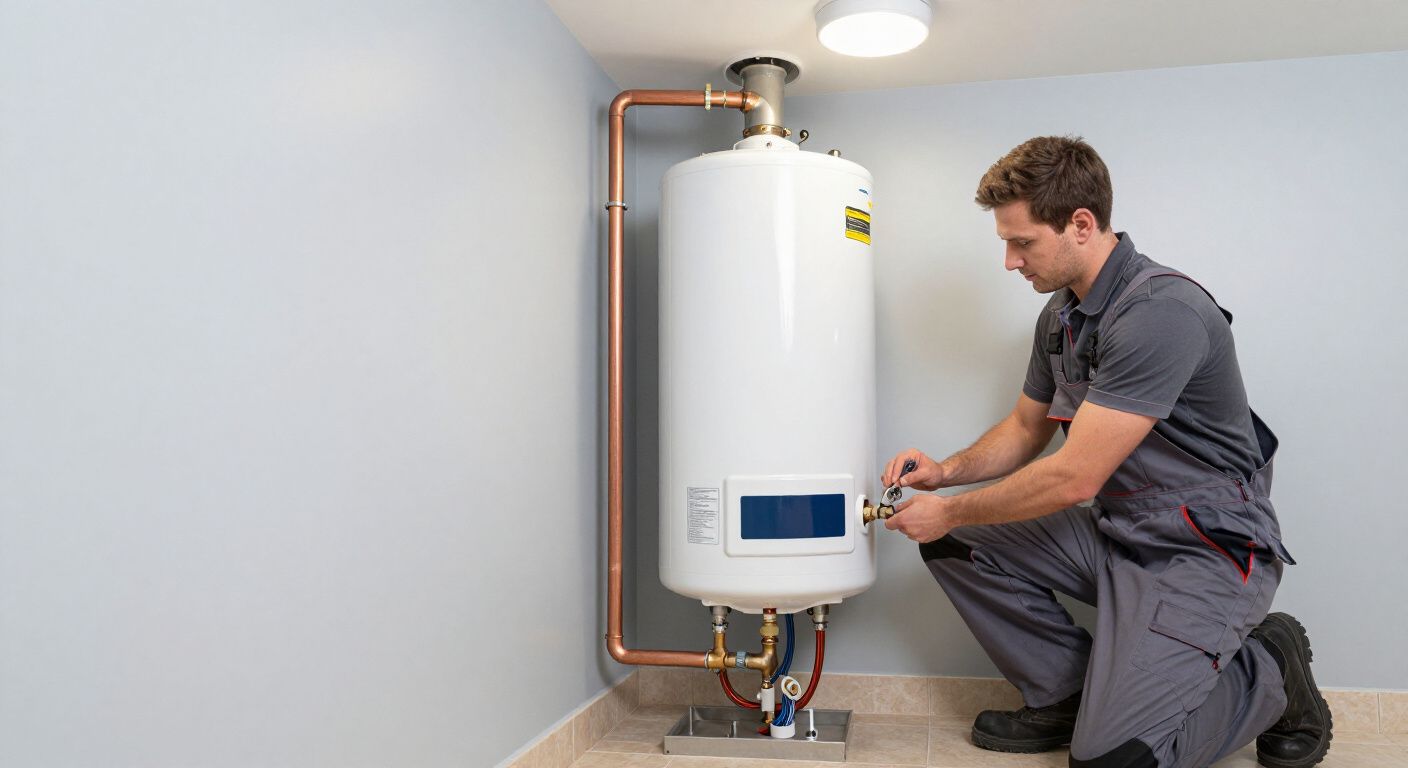


How Long Do Water Heaters Last? The Real Answer for South Florida Homes
Nathanael Jolteus • December 19, 2025

Most homeowners hear a number,  8 years, 10 years, maybe 12 , and assume that’s how long their water heater will last. In reality, water heater lifespan depends heavily on where you live, your water quality, and how the system is maintained.


In South Florida, water heaters almost always fail earlier than national averages. And when they do, the warning signs are usually there long before the unit stops working entirely.


This guide explains how long water heaters actually last in South Florida, why they fail, and how to know when replacement is the smarter move.


1. Average Water Heater Lifespan (National vs South Florida)

National averages often say:

  • Tank water heaters: 8–12 years

  • Tankless water heaters: 15–20 years

In South Florida, realistic expectations are closer to:

  • Tank water heaters: 6–10 years

  • Tankless water heaters: 12–15 years

The difference isn’t brand quality,  it’s environmental stress.


2. Why Water Heaters Fail Faster in South Florida

South Florida creates a perfect storm for water heater wear due to:

  • mineral-heavy water

  • constant year-round usage

  • high humidity

  • sediment buildup

  • higher incoming water pressure

These factors accelerate internal deterioration, especially inside traditional tank heaters.


3. Sediment Buildup: The #1 Lifespan Killer

Sediment forms when minerals settle at the bottom of the tank.

Over time, sediment:

  • traps heat

  • causes overheating

  • stresses the tank walls

  • reduces efficiency

  • leads to internal corrosion

Many South Florida heaters develop heavy sediment within just a few years.


4. Corrosion Happens From the Inside Out

Most homeowners assume tanks rust from the outside.

In reality:

  • corrosion starts internally

  • tank lining breaks down

  • steel is exposed

  • rust spreads quietly

By the time exterior rust is visible, the tank is often near failure.


5. The Anode Rod (Often Ignored, Always Important)

Water heaters rely on a sacrificial anode rod to protect the tank.

In mineral-heavy water:

  • anode rods degrade faster

  • tanks lose corrosion protection early

  • failure accelerates

Many heaters fail simply because the anode rod was never inspected or replaced.


6. Warning Signs Your Water Heater Is Near the End

A failing water heater often gives subtle clues first.

Common signs include:

  • inconsistent hot water

  • reduced hot water supply

  • popping or rumbling noises

  • rusty or discolored water

  • water pooling near the unit

  • pressure relief valve dripping

These are not “normal aging” , they’re warnings.


7. Noises Mean Trouble (Not Just Annoyance)

Popping or cracking sounds usually indicate:

  • thick sediment layers

  • overheating water

  • metal expansion against hardened debris

This stresses the tank and shortens remaining lifespan significantly.


8. Leaks Rarely Start Big

Most water heater failures don’t begin as floods.

Instead, they start as:

  • slow internal leaks

  • pressure-related seepage

  • hairline tank cracks

By the time visible leaking occurs, replacement is usually unavoidable.


9. Tank vs Tankless: Lifespan Reality

Tankless units last longer when maintained, but:

  • they are sensitive to mineral buildup

  • descaling is critical in South Florida

  • neglect shortens lifespan dramatically

A poorly maintained tankless unit can fail just as early as a tank system.


10. Why “Waiting Until It Fails” Is Risky

Waiting often leads to:

  • sudden loss of hot water

  • water damage

  • emergency replacement

  • limited equipment choices

  • higher labor costs

Planned replacement is almost always cheaper and less stressful.


11. When Replacement Is the Smart Move

Replacement is usually recommended when:

  • the unit is past expected lifespan

  • repairs are becoming frequent

  • efficiency has dropped

  • sediment is severe

  • corrosion is present

  • parts are failing together

Replacing early often prevents secondary damage.


12. How Professionals Evaluate Remaining Lifespan

At Leading Plumbing Services, we evaluate:

  • tank condition

  • sediment levels

  • pressure performance

  • anode rod status

  • valve integrity

  • leak indicators

This allows us to give honest guidance, not sales pressure.


13. How to Extend Water Heater Life

Homeowners can extend lifespan by:

  • flushing the tank annually

  • monitoring water pressure

  • servicing expansion tanks

  • replacing anode rods

  • addressing noises early

  • avoiding overheating settings

Maintenance can add years to a system’s life.


14. Replacement Is an Upgrade Opportunity

Newer water heaters offer:

  • better efficiency

  • faster recovery

  • improved safety

  • lower operating costs

  • better compatibility with modern homes

Replacement doesn’t just restore hot water , it improves performance.


South Florida Homeowner Reality

In South Florida, water heaters don’t fail “unexpectedly.” They fail predictably , faster than average, under constant stress, and with warning signs that are often overlooked.

The homeowners who plan ahead almost always save money.


Final Thoughts

If you’re asking “how long do water heaters last?”, the better question is how much life is left in yours. Knowing that answer before failure gives you control, options, and peace of mind.


 Call/Text Leading Plumbing Services for a water heater inspection and honest lifespan assessment:


(561) 506-6159


By Nathanael Jolteus December 29, 2025
A dishwasher flood escalates in minutes. Water spreads across cabinets, under appliances, into adjacent rooms, and down into flooring seams before most homeowners realize how serious it is. If you’re dealing with a dishwasher flooding emergency , this is not something to mop up and monitor. In South Florida homes, dishwasher floods are often caused by drain or sewer problems , not the dishwasher itself. This guide explains exactly what to do right now, why dishwasher floods happen, and when this becomes a same-hour plumbing emergency. STEP 1: Stop the Dishwasher and Shut Off the Water Act immediately. press STOP / CANCEL on the dishwasher turn off the water supply valve under the sink if water continues, shut off the main water supply Dishwashers discharge water quickly, every second matters. STEP 2: Do NOT Run the Kitchen Sink or Garbage Disposal This is critical. Dishwashers usually drain into: the kitchen sink drain the garbage disposal a shared branch line Running the sink or disposal can force more water back into the dishwasher and onto the floor. STEP 3: Contain the Water (Safely) While waiting for help: move items off the floor place towels to protect cabinets avoid stepping in pooled water near outlets Kitchen floods spread under base cabinets where damage isn’t immediately visible. Why Dishwashers Flood (Emergency Causes) 1. Blocked Kitchen Drain or Branch Line This is the most common cause. When the drain is restricted by: grease buildup food debris biofilm mineral scale …the dishwasher pumps water faster than the drain can handle, causing instant overflow. 2. Garbage Disposal or Air Gap Issues If your dishwasher drains through: a clogged disposal a blocked air gap …water has nowhere to go and backs up into the dishwasher or sink. 3. Main Drain or Sewer Line Problems If flooding happens alongside: gurgling in other drains slow toilets backups elsewhere …the dishwasher is exposing a system-level failure , not a local clog. 4. Aging Cast Iron Pipes (South Florida Factor) Older South Florida homes often have cast iron drains that: corrode internally narrow over time trap grease and debris Dishwashers are often the first fixture to flood when these pipes begin failing. 🚫 What NOT to Do During a Dishwasher Flood ❌ Do NOT keep running the dishwasher ❌ Do NOT plunge the sink aggressively ❌ Do NOT use chemical drain cleaners ❌ Do NOT assume it’s “just the appliance” ❌ Do NOT ignore water under cabinets Appliance replacement won’t fix a failing drain system. When This Becomes a SEWAGE EMERGENCY Treat it as urgent if: water smells foul water is dark or greasy backups appear in other fixtures flooding worsens when other drains are used This indicates drain or sewer involvement , not a dishwasher defect. Hidden Damage Dishwasher Floods Cause Even short flooding events can lead to: cabinet base swelling warped flooring mold growth behind kick plates damage under dishwashers and fridges leaks spreading into adjacent rooms In South Florida humidity, mold can begin forming within 24–48 hours . When to Call an Emergency Plumber IMMEDIATELY Call right away if: water is actively spreading flooding repeats during cycles multiple drains are slow or backing up the home has older plumbing flooding happened suddenly sewage odor is present These are same-hour emergencies. How Emergency Plumbers Handle Dishwasher Floods At Leading Plumbing Services , emergency response includes: stopping active flooding clearing kitchen and branch drains inspecting disposal and air gap connections camera-inspecting drain lines identifying cast iron or sewer issues preventing repeat flooding We fix the cause , not just the mess. Why Waiting Almost Guarantees It Happens Again Dishwasher floods don’t resolve themselves. Waiting often results in: worse drain restrictions larger floods cabinet replacement mold remediation emergency sewer repairs Early intervention usually limits damage to the drain line only. South Florida Emergency Reality In South Florida, dishwasher flooding emergencies are frequently the first visible sign of failing kitchen drain infrastructure, especially in homes with older pipes and heavy grease buildup. The dishwasher didn’t cause the problem. It exposed it. Final Emergency Guidance If your dishwasher is flooding the kitchen, shut it off immediately and stop using nearby plumbing. Call a professional before water damage spreads under cabinets and into floors. Call/Text Leading Plumbing Services now for 24/7 emergency dishwasher flooding and drain repair: (561) 506-6159
By Nathanael Jolteus December 29, 2025
You turn the handle expecting hot water , and get nothing. No warmth. No gradual cooling. Just cold water everywhere. When hot water suddenly disappears , it’s rarely a coincidence and often signals a failure that can escalate quickly if handled incorrectly. A no hot water emergency isn’t just inconvenient. In many cases, it’s the first sign of pressure issues, internal tank failure, gas or electrical shutdowns, or leaks that haven’t surfaced yet. This guide explains what to check immediately , what not to touch, and when this becomes a same-hour plumbing emergency. FIRST: Confirm It’s the Whole House Check: multiple sinks showers tubs If all fixtures are cold, the issue is not local ,it’s system-level. If only one fixture is affected, the problem may be isolated and less urgent. SECOND: Check for Visible Warning Signs Before touching anything, look for: water pooling near the water heater damp flooring rust or corrosion unusual noises (popping, hissing) gas or burning smells If any of these are present, stop and call immediately. Why Hot Water Fails Suddenly (Emergency Causes) 1. Water Heater Leak or Internal Failure Many heaters shut down when: internal leaks develop pressure becomes unstable tanks begin to fail The hot water stops before flooding begins , a critical early warning. 2. Gas Supply or Control Failure For gas water heaters: pilot light failure gas valve malfunction safety shutdown Gas-related failures should never be re-lit blindly. 3. Electrical Failure or Breaker Trip Electric heaters may lose power due to: failed heating elements wiring issues overheating shutoffs Repeated resets indicate a deeper problem. 4. Pressure or Expansion Issues Excess pressure can: trigger safety valves force heaters offline accelerate tank damage Pressure problems often appear as “no hot water” first. 🚫 What NOT to Do During a No Hot Water Emergency ❌ Do NOT keep resetting breakers ❌ Do NOT relight pilots repeatedly ❌ Do NOT turn the temperature higher ❌ Do NOT ignore leaks or moisture ❌ Do NOT assume it’s “just old” These actions often turn a repairable issue into a full replacement. Why This Is Riskier in South Florida South Florida water heaters fail faster due to: mineral-heavy water year-round usage sediment buildup high humidity accelerating corrosion Many systems here reach critical failure years earlier than expected. Hidden Damage Homeowners Miss Sudden hot water loss may indicate: tank corrosion internal leaks draining into slabs pressure relief discharge gas venting issues electrical overheating The absence of hot water is often the symptom , not the problem. When This Is a SAME-HOUR Emergency Call immediately if: hot water stopped suddenly water is visible near the heater gas smell is present popping or hissing noises occur the heater is 6–8+ years old the shutdown followed pressure changes These are do-not-wait situations. How Emergency Plumbers Handle No Hot Water Calls At Leading Plumbing Services , emergency response includes: safe shutdown of gas or power identifying leak vs control failure pressure testing inspecting heating elements or burners determining repair vs replacement preventing sudden tank rupture We focus on preventing escalation first. Why Waiting Can Turn This Into a Flood Many water heaters fail in stages: hot water stops pressure becomes unstable internal corrosion worsens tank ruptures Catching it at stage one saves thousands. South Florida Emergency Reality In South Florida, no hot water emergencies are often the first visible sign of a failing water heater. Homes that wait often end up dealing with leaks, flooding, or gas-related hazards shortly after. Final Emergency Guidance If your home suddenly has no hot water, treat it as a warning , not just an inconvenience. Avoid resets and guesswork, and call a professional before the system fails completely. Call/Text Leading Plumbing Services now for 24/7 emergency no-hot-water diagnosis: (561) 506-6159