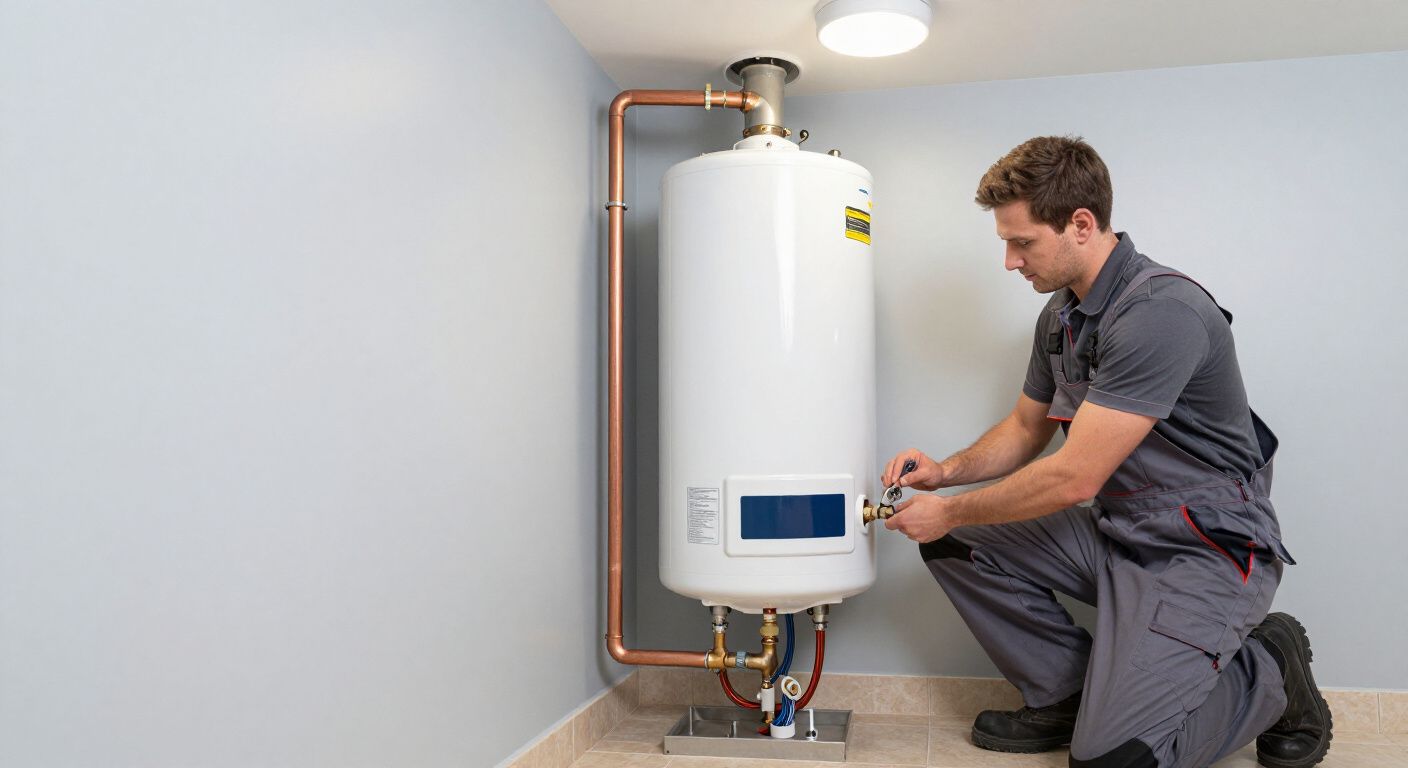


Smelling Gas Near Your Water Heater Is Not a “Wait and See” Situation
Nathanael Jolteus • December 24, 2025

If you smell gas near your water heater, this is not a plumbing issue to monitor, it’s a potential life-safety emergency.


Many homeowners hesitate because the smell is faint, intermittent, or comes and goes. That hesitation is dangerous. Gas leaks are unpredictable, and even a small leak can escalate quickly under the right conditions.


This guide explains exactly what to do immediately, why gas odors around water heaters are especially serious, and when to evacuate and call for emergency help.


FIRST: If the Smell Is Strong — Leave the Area Immediately

If the gas smell is:

  • strong

  • overwhelming

  • causing dizziness or nausea

  • accompanied by hissing sounds

👉 Leave the home immediately.

👉 Do NOT turn lights on or off.

👉 Do NOT use phones inside the house.

👉 Call emergency services or the gas company from outside.


Your safety comes first , diagnosis comes later.


SECOND: Identify the Type of Smell (If It’s Faint and You’re Safe)

Gas-related smells near water heaters usually fall into two categories:


Rotten Egg / Sulfur Smell

Often associated with:

  • natural gas odorant

  • gas line leaks

  • faulty gas valves

This is the most serious scenario.


🔹 

Burning or Exhaust-Like Smell

Can indicate:

  • improper combustion

  • venting or flue issues

  • back-drafting

Still dangerous, but often related to ventilation failure rather than a raw gas leak.


Why Gas Smells Near Water Heaters Are Especially Dangerous

Water heaters involve:

  • open flames or ignition systems

  • constant gas flow

  • enclosed spaces (garages, closets, utility rooms)

A leak near a water heater means ignition sources are already present, which increases explosion risk.


Common Causes of Gas Smell Near Water Heaters

In South Florida homes, common causes include:

  • loose or damaged gas supply lines

  • failing gas control valves

  • deteriorated flexible gas connectors

  • improper installation

  • venting or flue separation

  • corrosion from humidity

  • appliance aging (6–10+ years)

Many failures happen gradually before becoming obvious.


🚫
What NOT to Do If You Smell Gas


Do NOT attempt to relight the pilot


❌ Do NOT tighten fittings blindly


❌ Do NOT ignore intermittent smells


❌ Do NOT ventilate aggressively if smell is strong


❌ Do NOT “sleep on it”


Gas problems do not self-correct.


If the Smell Appears When the Heater Runs

This is a critical detail.

If gas smell:

  • appears during heating cycles

  • fades when the unit shuts off

…it may indicate:

  • failing gas valve

  • improper combustion

  • burner or ignition issues

These problems worsen with continued operation.


Why South Florida Homes Are at Higher Risk

Gas-related water heater issues occur more often here due to:

  • high humidity accelerating corrosion

  • older gas installations

  • enclosed garage installations

  • poor ventilation design in older homes

Environmental factors shorten component lifespan.


When to Call an Emergency Plumber IMMEDIATELY

Call right away if:

  • gas odor is present near the heater

  • smell returns repeatedly

  • the heater is older than 6–8 years

  • you hear hissing

  • pilot light goes out repeatedly

  • carbon monoxide detectors activate

These are same-hour emergencies.


What Emergency Plumbers Do in Gas Situations

At Leading Plumbing Services, emergency gas response includes:

  • shutting down gas safely

  • testing for active leaks

  • inspecting gas valves and connectors

  • checking venting and combustion

  • determining repair vs replacement

  • coordinating with gas utilities when needed

We prioritize safety first, restoration second.


Why Waiting Is Dangerous

Delaying gas-related repairs can lead to:

  • fire risk

  • explosion risk

  • carbon monoxide exposure

  • appliance failure

  • insurance denial if negligence is proven

This is not an area for delay or DIY.


South Florida Emergency Reality

In South Florida, gas smell near water heater emergencies often occur in aging systems installed in garages or utility closets with limited ventilation.


Many homeowners notice faint smells days or weeks before a serious incident.


Those early signs matter.


Final Emergency Guidance

If you smell gas near your water heater, take it seriously. Leave the area if needed, avoid ignition sources, and call a professional immediately.


 Your home , and your safety , depend on fast, correct action.


 Call/Text Leading Plumbing Services now for 24/7 emergency gas and water heater service:


(561) 506-6159


By Nathanael Jolteus December 28, 2025
You walk outside and see it, water bubbling up from the ground, flooding the yard, running toward the street, or soaking the area near the foundation. No sprinklers are on. No hose is running. This is almost always a main water line break emergency , and it gets worse fast. Main line failures involve pressurized water , meaning hundreds of gallons can escape every hour. What looks like “yard flooding” can quickly turn into foundation damage, slab issues, and massive water bills if not handled immediately. FIRST: Shut Off the Main Water Supply Immediately This is critical. locate the main shutoff valve near the meter turn it off completely If you cannot shut it off: contact your water utility immediately call an emergency plumber right away Every minute the line stays pressurized causes more underground damage. Why Main Water Lines Fail Suddenly In South Florida, main line failures are rarely random. They’re usually caused by: aging underground pipes corrosion from mineral-heavy water shifting sandy soil previous repairs that weakened sections pressure fluctuations pipe material reaching end-of-life The break you see is often the final failure , not the beginning. Common Signs of a Main Water Line Break You may notice: water bubbling or spraying from the ground yard flooding without rain sudden loss of water pressure water pooling near the foundation muddy or eroding soil unusually high water bills Any combination of these is an emergency. 🚫 What NOT to Do During a Main Line Break ❌ Do NOT assume it’s irrigation ❌ Do NOT try to dig it yourself ❌ Do NOT turn the water back on to “check it” ❌ Do NOT ignore sinking or eroding soil ❌ Do NOT delay calling a professional Underground pressure failures escalate rapidly. Why This Is Especially Dangerous in South Florida South Florida conditions make main line breaks more severe because: sandy soil washes away quickly erosion undermines slabs and driveways underground leaks spread horizontally humidity slows drying older neighborhoods have aging infrastructure A small delay can lead to foundation and structural damage. Hidden Damage Homeowners Don’t See Even if the water is outside, damage may already include: soil erosion under slabs voids forming beneath concrete compromised pipe supports water intrusion toward the foundation long-term settling issues Main line leaks don’t stay “outside problems.” When This Is a SAME-HOUR Emergency Call an emergency plumber immediately if: water is actively flooding the yard pressure dropped suddenly inside the home the shutoff won’t stop the flow the break is near the house the home has older plumbing the leak appeared suddenly These are same-hour, same-day emergencies. How Emergency Plumbers Handle Main Line Breaks At Leading Plumbing Services , emergency response includes: shutting down the water safely locating the exact break pressure testing the system isolating damaged sections repairing or replacing the failed line ensuring proper burial and support restoring water safely We fix the failure point , not just the visible leak. Why Waiting Makes Repairs Much More Expensive Delays often result in: severe soil erosion slab undermining driveway or sidewalk damage full line replacement instead of repair extreme water bills Fast action usually limits damage to one section. South Florida Emergency Reality In South Florida, main water line break emergencies are common in older homes and neighborhoods with aging underground pipes. Many homeowners notice subtle signs , pressure drops, damp soil , before a full rupture occurs. When the rupture happens, it’s already critical. Final Emergency Guidance If water is flooding your yard and you didn’t turn anything on, shut off the main water supply immediately and call a professional. Main line breaks do not stabilize , they worsen under pressure. Call/Text Leading Plumbing Services now for 24/7 emergency main water line repair: (561) 506-6159
By Nathanael Jolteus December 28, 2025
When a washing machine overflows, water spreads faster than almost any other household leak. One cycle can dump dozens of gallons onto floors, into walls, and beneath slabs , all in minutes. If you’re dealing with a washing machine overflowing emergency , this is not a spill or appliance issue. In most South Florida homes, it’s a drainage system failure that requires immediate attention. This guide explains what to do right now , why washer overflows happen, and when to call an emergency plumber immediately. STEP 1: Shut Off the Washing Machine Immediately Stop the water source first. turn the washer OFF unplug the machine if safe shut off the hot and cold supply valves behind the washer Do not let the cycle continue , every second adds more water. STEP 2: Stop Using All Nearby Plumbing Washer drains are often connected to: main branch drains floor drains shared sewer lines Using sinks, toilets, or showers nearby can force more water back out of the washer drain. STEP 3: Contain the Water (Safely) While waiting for help: move items off the floor use towels to redirect water avoid stepping into pooled water near outlets Laundry room floods spread laterally and vertically fast. Why Washing Machines Overflow (Most Common Causes) 1. Blocked or Restricted Washer Drain Line This is the #1 cause. Washer drains clog due to: lint buildup detergent residue biofilm sediment and debris When the washer pumps out water faster than the drain can handle, it backs up immediately. 2. Main Drain or Sewer Line Issues If water: backs up into other fixtures appears in floor drains overflows during heavy cycles …the issue may be beyond the washer, in the main drain or sewer line. 3. Improper Standpipe or Drain Setup Many homes have washer drains that are: too short poorly vented improperly sloped This causes overflow even without a full clog , especially with modern high-volume washers. 4. Cast Iron Pipe Deterioration (South Florida Factor) Older South Florida homes often have cast iron drain lines that: corrode internally narrow over time trap lint and debris Heavy washer discharge exposes these weak points quickly. 🚫 What NOT to Do During a Washer Overflow ❌ Do NOT keep running the washer ❌ Do NOT plunge the standpipe aggressively ❌ Do NOT pour chemicals into the drain ❌ Do NOT ignore repeat overflows ❌ Do NOT assume it’s “just the machine” Appliance replacement won’t fix a failing drain system. When This Becomes a SEWAGE Emergency Treat it as urgent if: water smells foul water is dark or dirty backups appear in other fixtures the overflow happens during rain gurgling occurs in nearby drains This indicates system-level failure , not a local clog. Hidden Damage Washer Overflows Cause Even short overflows can result in: water under flooring mold growth in walls damage to baseboards moisture trapped beneath slabs recurring backups In South Florida humidity, mold can develop in 24–48 hours. When to Call an Emergency Plumber IMMEDIATELY Call right away if: the washer overflows repeatedly water spreads beyond the laundry room multiple drains are slow or backing up the home has older plumbing flooding happens suddenly sewage odor is present These are same-hour emergencies. How Emergency Plumbers Handle Washer Overflows At Leading Plumbing Services , emergency response includes: stopping active overflow clearing washer and branch drains camera inspection of drain lines identifying cast iron or sewer issues correcting standpipe or venting problems preventing repeat flooding We fix the cause , not just the symptom. Why Waiting Guarantees It Happens Again Washer overflows don’t resolve themselves. Waiting often leads to: worse blockages higher water damage costs mold remediation emergency sewer repairs Early intervention saves thousands. South Florida Emergency Reality In South Florida, washing machine overflowing emergencies are one of the most common signs of failing drain infrastructure, especially in homes built decades ago with cast iron piping. The washer didn’t cause the problem ,it revealed it. Final Emergency Guidance If your washing machine is overflowing, shut it off immediately and stop using nearby plumbing. Call a professional before water damage spreads and the next cycle makes it worse. Call/Text Leading Plumbing Services now for 24/7 emergency washer drain and flooding response: (561) 506-6159